

Most people assume a sword’s age is what makes it valuable. That assumption costs collectors real money. The truth is that sword investment value factors span at least six distinct dimensions, and age is only one of them. Six major factors determine an antique sword’s worth: age, condition, origin, type, rarity, and the presence of its original scabbard. Miss any one of these, and you can overpay for a mediocre piece or, worse, pass on something genuinely exceptional. This guide gives you the full framework.
Table of Contents
- Key Takeaways
- Age and condition: the foundational sword investment value factors
- Origin, maker reputation, and craftsmanship quality
- Rarity, provenance, and original accessories
- Market demand, trends, and economic factors
- How to appraise and select swords for investment
- My honest take on what most investors overlook
- Explore investment-grade swords at Moonswords
- FAQ
Key Takeaways
| Point | Details |
|---|---|
| Age needs context | A sword’s era and historical relevance matter more than raw age alone. |
| Condition is decisive | Rust, over-restoration, and missing parts can dramatically reduce market value. |
| Maker and origin command premiums | Certified swords from renowned smiths or recognized traditions fetch significantly higher prices. |
| Provenance multiplies value | Documented ownership history and certificates increase both buyer confidence and sale price. |
| Market timing matters | Collector trends, auction cycles, and cultural interest directly shift sword investment returns. |
Age and condition: the foundational sword investment value factors
Age sets the stage, but it does not write the whole story. A 200-year-old katana in poor condition with a pitted blade and a cracked handle will often sell for less than a well-preserved 80-year-old piece with a clean hamon (the temper line visible along the blade’s edge) and intact fittings. The era matters too. Swords from militarily or culturally significant periods, such as Japan’s Edo period or medieval Europe’s late Gothic era, carry context that elevates desirability beyond simple chronology.
Condition grading involves a close assessment of several specific traits:
- Blade integrity: Surface rust, deep pitting, edge chips, or cracks near the tip all reduce value. Light patina on antiques is acceptable and sometimes expected.
- Handle and grip: Looseness, cracking, or replacement materials signal deferred maintenance or prior damage.
- Scabbard condition: Warping, splits, or non-original replacements reduce the perceived completeness of the piece.
- Previous restoration: Professional polish by a trained togishi (sword polisher) can preserve value. Amateur grinding or re-profiling destroys it.
The question of restoration trips up many new investors. Over-restoration can reduce the desirable market price by significant margins, particularly on antique pieces where patina and original surface evidence are part of the historical record. A Civil War-era cavalry saber that has been aggressively polished to look “new” loses the very authenticity that collectors pay for.
Pro Tip: Before purchasing any antique sword, examine it under raking light at a low angle. This reveals surface scratches, inconsistencies in polish, and hidden changes in blade geometry that are invisible under direct overhead lighting.
Origin, maker reputation, and craftsmanship quality
Where a sword was made and who made it can matter more than almost any other single factor in collectible sword valuation. Japanese katanas, European longswords, Chinese jian, and Persian shamshirs each carry distinct market communities, and the depth of collector interest in each tradition varies considerably.
Japanese swords benefit from one of the most formalized authentication systems in the world. Famous makers and certifications from bodies like the NBTHK (Nihon Token Hozon Kai) significantly influence investment value and market demand. An NBTHK-certified blade commands immediate credibility. European swords rely more on provenance and archival documentation, since smiths’ marks are harder to trace. Chinese jian from named regional schools or specific dynasties carry their own authentication challenges, though the collector market for these is growing steadily.
Craftsmanship quality is measurable, not just impressionistic. Steel type, folding technique, and clay tempering all add tangible, collectible value. Here is how the major craftsmanship indicators compare:
| Craftsmanship Factor | Lower Investment Grade | Higher Investment Grade |
|---|---|---|
| Steel type | Monosteel, unknown alloy | Tamahagane, T10 tool steel, differentially hardened |
| Construction | Hidden tang, pinned handle | Full tang, traditionally fitted |
| Tempering | Uniform hardening | Clay tempering with visible hamon |
| Fittings (tsuba, fuchi) | Cast metal, generic pattern | Hand-carved, school-specific motifs |
The artisan’s reputation translates directly to market premium. A katana forged by a living National Treasure-designated smith in Japan can sell for tens of thousands of dollars. A production piece using identical steel from an unverified workshop will sell for a fraction of that price. Reputation is, in this market, a tangible asset.
Rarity, provenance, and original accessories
Rarity in sword collecting works similarly to how it functions in other collectible categories. Limited editions and restricted production runs command premiums across virtually every collectible asset class, and swords are no exception. A sword model produced in a numbered run of 50, with documented manufacturing records, will hold and grow value more predictably than an open-production piece.
Provenance is where many collectors genuinely underestimate the value they leave on the table. Well-documented provenance, verified by certificates or prior ownership records, can significantly increase a sword's investment value. The documentation itself does not need to be elaborate. A photograph showing the sword in a known collection, a letter of acquisition from a recognized estate, or an auction record from a major house all function as provenance anchors.
Key elements that strengthen a sword’s provenance file include:
- Certificates of authenticity from recognized appraisers or governing bodies
- Photographs showing the sword in prior documented settings
- Original purchase receipts or auction records
- Letters, journals, or military records connecting the sword to a specific historical event or figure
- Chain-of-custody records showing each owner from original issue or purchase
Original accessories deserve separate attention. The presence of a matching original scabbard, blade bag, cleaning kit, or storage box adds measurable value. Absence of these parts often causes depreciation. A complete daisho set (paired katana and wakizashi with matching fittings) can be worth two to three times the value of either blade sold individually.
Pro Tip: When evaluating provenance documents, check whether the descriptions match the physical sword exactly, including blade length, signature inscriptions (mei), and any noted flaws. Vague or generic certificates that could apply to any sword of the same type are nearly worthless to serious buyers.
Market demand, trends, and economic factors
Understanding market cycles is what separates disciplined sword investors from enthusiastic collectors who happen to buy expensive things. Market demand driven by cultural interest and collector trends affects sword prices more than just historical factors alone. Anime, film, and gaming franchises have driven measurable spikes in demand for specific sword types, particularly Japanese katanas and fantasy-styled longswords.
Here are the core market forces you need to track:
- Auction results: Major auction houses publish hammer prices that function as real-time market data. Track results for the specific type, era, and origin category you are targeting.
- Cultural momentum: A major film, documentary series, or museum exhibition focused on a particular sword tradition can push collector demand sharply upward for 12 to 24 months.
- Economic conditions: Market fluctuations and economic cycles affect luxury collectibles broadly. During periods of economic contraction, discretionary collector spending typically softens.
- Supply constraints: When a category of sword becomes harder to legally export or authenticate due to changing regulations, existing documented examples in private collections often appreciate faster.
- Maintenance and storage quality: Proper storage and maintenance influence condition over time, and condition directly affects investment return potential. Neglect leads to corrosion that is often irreversible.
“The sword market rewards patience and penalizes ignorance. The collectors who generate strong returns are those who study specific niches deeply rather than chasing whatever category is trending at any given auction cycle.”
The authentic Japanese sword market offers a useful case study in how cultural popularity and craftsmanship quality interact. Demand for collectible katanas has been consistently strong over the past two decades, but the category is internally segmented. A certified Edo-period blade will behave differently in the market than a modern gendaito (sword made by a living smith), even though both can be excellent investments for different reasons.
How to appraise and select swords for investment
Bringing all the value factors together into a practical decision process is where theory becomes profitable action. Here is a step-by-step appraisal framework that we recommend for any serious sword investment:
- Establish the basics: Identify the sword’s type, approximate era, and geographic origin before anything else. These determine which specialist appraisers and authentication bodies are relevant.
- Conduct a physical condition assessment: Use the condition criteria above, including blade integrity, handle, and scabbard. Document your findings with photographs in raking light.
- Research the maker or workshop: Search for the smith’s signature (mei) in published sword dictionaries, NBTHK records, or regional specialist databases. Unknown makers are not necessarily less valuable, but they carry higher authentication risk.
- Verify and build the provenance file: Gather every available document. If provenance is thin, price accordingly and plan to invest in professional appraisal to strengthen the record.
- Assess rarity and market comparables: Search recent auction records for comparable pieces. Swords with original scabbards and documentation consistently fetch higher auction prices. Use these as your price anchors.
- Factor in storage and ongoing maintenance costs: Sword investment return calculations should account for climate-controlled storage, periodic professional maintenance, and insurance.
Pro Tip: Never buy a sword as an investment without a written appraisal from a specialist who has no financial stake in the transaction. Dealer valuations are useful context but are not objective appraisals.
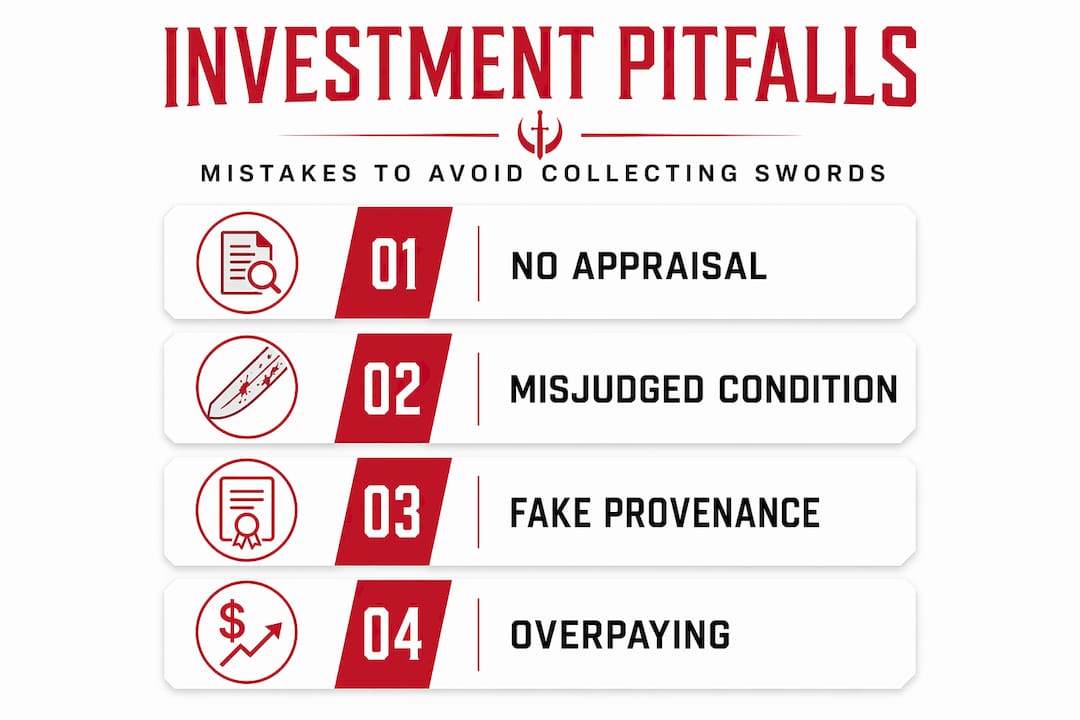
Common pitfalls to avoid are worth calling out directly. Buying based solely on visual appeal without verifying condition or provenance is the most frequent expensive mistake. Paying a premium for restored pieces without understanding what the restoration removed from the original is a close second. The table below summarizes what drives value up versus down:
| Factor | Value Increase | Value Decrease |
|---|---|---|
| Condition | Clean blade, intact fittings | Rust, pitting, amateur polish |
| Provenance | Certificates, ownership records | No documentation |
| Accessories | Original scabbard, matching fittings | Replacements, missing components |
| Maker | Named smith, certified authentication | Unknown, unverifiable |
| Rarity | Limited production, battlefield association | Mass-produced, common type |
My honest take on what most investors overlook
I’ve spent years working closely with collectors across multiple sword traditions, and the pattern I keep seeing is this: beginners obsess over age, intermediate collectors obsess over maker signatures, and the people who actually build valuable collections obsess over provenance.
A piece I think about often is a Chinese dao that came through a specialist auction a few years back. The blade was not particularly old, maybe 120 years. The maker was competent but not famous. What drove the bidding well past estimate was a single photograph from a military archive, placing the weapon in the hands of a documented historical figure. That one piece of paper changed the entire value calculation.
In my experience, craftsmanship details that beginners consistently miss include the quality of the hada (the grain pattern of the folded steel, visible under magnification) and the sharpness of the kissaki (blade tip geometry). These are not cosmetic. They reflect the smith’s technical mastery and directly affect how authenticated specialists grade the work. A blade with a perfectly formed ko-maru kissaki and tight, consistent itame hada tells you something about its maker that no certificate can fully convey.
My honest contrarian view: the hand-forged craftsmanship details visible in premium modern production often hold their value more predictably than mid-tier antiques with vague provenance, because the documentation is current, the condition is known, and the market for quality contemporary work is growing. Do not dismiss modern artisan pieces simply because they are not centuries old.
Explore investment-grade swords at Moonswords

At Moonswords, we work directly with master artisans who use clay tempering, traditional folding methods, and full tang construction to produce pieces that meet the craftsmanship standards serious collectors demand. Our high-end katana collection includes detailed provenance documentation for each blade, clear steel and construction specifications, and direct access to our team for pre-purchase appraisal support. Whether you are building a collection focused on Japanese katanas or exploring hand-forged swords across multiple traditions, we can help you identify pieces that align with the investment value factors covered in this guide. Our customer team understands what collectors are actually looking for.
FAQ
What are the most important sword investment value factors?
The six primary factors are age, condition, origin, type, rarity, and the presence of the original scabbard. Provenance documentation and maker certification further strengthen valuation.
Do swords appreciate in value over time?
Swords can and do appreciate, but returns depend heavily on condition, maker reputation, and collector demand cycles. High-quality certified pieces from recognized traditions historically show the strongest long-term value retention.
How does provenance affect a sword’s worth?
Documented provenance, including ownership records, certificates, and photographs, can significantly increase a sword’s value by establishing historical legitimacy and reducing buyer risk.
How can I assess a sword’s worth before buying?
Start with a physical condition inspection, then research the maker, verify provenance documents, and compare against recent auction results for comparable pieces. A written appraisal from a disinterested specialist is the most reliable final step.
Does the original scabbard really affect price that much?
Yes. Original accessories including matching scabbards contribute directly to appraisal value and collector appeal. Their absence frequently causes measurable price depreciation at auction.